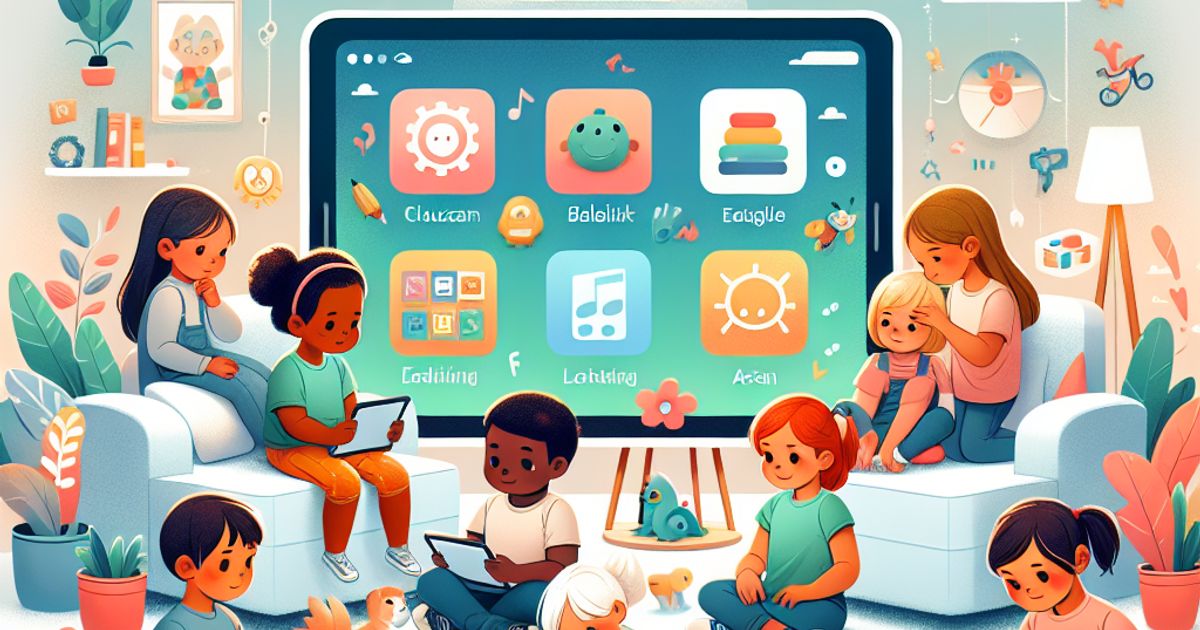
What if I told you that screen time isn’t the villain it’s often made out to be? Picture this: instead of endless arguments about turning off the tablet, you and your child are co-viewing an app that teaches multiplication tables or helps them master telling time. Sounds like a win, right? The truth is, screens aren’t going anywhere. They’re part of our kids’ world — and ours too. So instead of fighting the tide, let’s learn how to swim with it.
The Numbers: What Research Actually Recommends
The American Academy of Pediatrics (AAP) has given parents some clear starting points. Their 2016 policy statement recommends prioritizing educational content, co-viewing, and creating screen-free zones. For kids aged 4–9, they suggest limiting recreational screen time to about one hour per day — but crucially, they emphasize that quality matters more than quantity. Watching a cartoon? Less ideal. Engaging with an interactive math app like Math Tank? Much better.
Research from Stanford reinforces this: interactive, educational apps can be far more beneficial than passive screen time like TV. A study published in JAMA Pediatrics found interactive media helps young children develop problem-solving skills and cognitive abilities. So the real question isn’t just “how long?” — it’s “doing what?”
Screen Time Can Actually Help Them Learn
This is the part parents often overlook in the guilt spiral: educational screen time genuinely works. Apps like Clock Master and Spelling Bee are designed to teach kids math, spelling, and time-telling in an engaging, interactive way — not as a distraction, but as a tool.
The AAP itself highlights that high-quality educational media can enhance cognitive development and problem-solving skills. So instead of asking “how do I limit screens?” start asking “how do I make this hour count?” The right app is far closer to a lesson than a babysitter.
What Screens Are Doing to Young Eyes — and Which Are Worst
One of the most common parenting concerns about screen time is the impact on children’s eyesight — and it’s a valid one. The American Optometric Association recognises digital eye strain (also called Computer Vision Syndrome) as a real condition, with symptoms including dry eyes, headaches, blurred vision, and neck and shoulder discomfort. But not all screens carry the same risk.
- Smartphones are typically held 8–12 inches from the face — the most demanding on young eyes. Small text, high brightness, and short viewing distance cause the eyes to work harder and blink up to 50% less than normal.
- Tablets sit in the middle ground: closer than a TV but further than a phone.
- TVs viewed from across the room are the least straining — distance really is your friend here.
- VR headsets place screens just inches from the eyes in an immersive environment. This is the newest and most studied concern. Major manufacturers including Apple and Meta currently advise that children under 13 avoid VR use entirely, citing early research suggesting it may disrupt normal eye development.
A simple habit recommended by most eye doctors is the 20-20-20 rule: every 20 minutes of screen time, pause and look at something 20 feet away for 20 seconds. This gives the eye muscles a chance to relax properly.
Beyond eye strain, excessive near-focus time — screens, reading, close-up work — is linked to rising rates of myopia (nearsightedness) in children. Childhood myopia has nearly doubled in prevalence over the past three decades, and increased screen use during the COVID-19 lockdowns correlated with a measurable spike in new myopia diagnoses in school-age children.
The Outdoor Antidote: Why Open-Air Play Protects Vision
Here’s the part that surprises most parents: the best thing you can do for your child’s eyes after an hour on a screen isn’t dimming the brightness or installing a blue-light filter — it’s sending them outside.
A landmark meta-analysis published in Ophthalmology (the journal of the American Academy of Ophthalmology) found that children who spend more time outdoors are significantly less likely to develop myopia, even when they also use screens regularly. The benefit comes from natural light specifically, not just physical activity. Bright outdoor light — even on an overcast day — stimulates the release of retinal dopamine, a neurotransmitter that regulates healthy eye growth and prevents the eyeball elongation that causes myopia.
Current research suggests that 60–90 minutes of outdoor time per day provides meaningful protection. A large Taiwanese study that introduced mandatory outdoor recess in schools found a statistically significant reduction in new myopia cases compared to control schools that kept kids inside. That hour of running around on open ground isn’t just burning energy — it’s directly protecting your child’s sight.
When Your Child Just Can’t Put the Screen Down
Kids love screens. That’s not a flaw — it’s a design feature of good interactive content. The answer isn’t banning them; it’s redirecting the energy. Try swapping passive shows for purposeful apps: Clock Lessons and Multiplication Practice scratch the same itch while actually building skills.
Balance also matters. After 20 minutes on Clock Master, encourage your child to practice telling time on a physical clock or build something with their hands. Research shows that alternating between digital and physical learning improves retention — and it naturally breaks up the near-focus time that strains young eyes.
Creating Screen-Free Zones That Actually Stick
Boundaries work best when they’re tied to places and routines, not arbitrary time limits. Start by making family meals and bedrooms screen-free — spaces that carry a clear message: this is for connection and rest, not content.
Add time-based rules too: no screens during homework, none in the hour before bed. Consistent routines help children self-regulate far better than constant negotiation. And the most effective rule of all? Follow it yourself. Kids notice.
What the Experts Say
The consensus among researchers and child development specialists is consistent: the type of screen time matters more than the amount. Devorah Heitner, author of Screenwise, recommends using screens as a way to connect with your child rather than as a babysitter. Engage with them while they’re using apps or watching videos — ask “What did you learn?” or “What do you think will happen next?”
Jonathan Haidt’s book The Anxious Generation takes a harder look at the broader picture, highlighting the importance of helping kids develop a healthy relationship with technology rather than simply eliminating screens. The goal is digital literacy, not digital abstinence.
📚 Books We Recommend
If you’re looking for guidance on navigating screen time and parenting in the digital age, here are some fantastic reads:
- The Art of Screen Time by Anya Kamenetz – A balanced take on managing screen use without guilt or fear.
- Screenwise by Devorah Heitner – Learn how to mentor your child in the digital world.
- Telling Time with Big Mama Cat by Dan Harper – A delightful storybook that helps kids learn to tell time.
Some links are affiliate links — if you buy through them, we earn a small commission at no extra cost to you. We only recommend products we genuinely believe in.
🎮 Tools & Toys We Love
Here are some parent-approved tools to enhance your child’s learning:
- Learning Resources Time Activity Set – A hands-on way to learn time-telling skills.
- Multiplication Table – Perfect for practicing math facts with ease.
You’re Already Getting It Right
Parenting in the digital age is genuinely hard — the goalposts keep moving and everyone has an opinion. But here’s what the research keeps coming back to: observe, adjust, stay curious. Are they engaged and learning, or zoning out? That’s your compass.
You know your child best. The fact that you’re reading this — looking for ways to help them learn and grow rather than just switching the TV off and hoping for the best — already puts you ahead. With tools like Math Tank, a bit of outdoor time, and a few intentional habits, you’re setting them up for a healthy relationship with technology that lasts well beyond childhood.
So take a breath. Screen time isn’t the enemy. It’s a tool. And you’ve got this.
Try Our Free Math & Time Tools
No download, no signup, no ads. Multiplication practice, division drills, clock lessons, and more — right in your browser.
Browse All Free Tools →